An upholstered ottoman is one of the most versatile pieces of furniture you can add to your home. It can work as a comfortable footrest, extra seating, a stylish accent piece, or even a practical storage solution. Because ottomans are available in different sizes, fabrics, colors, and designs, it is easy to find an option that complements almost any interior style.
Whether you are decorating a modern living room, a cozy bedroom, or a compact apartment, the right upholstered ottoman can add both comfort and character to your space.
What Is an Upholstered Ottoman?
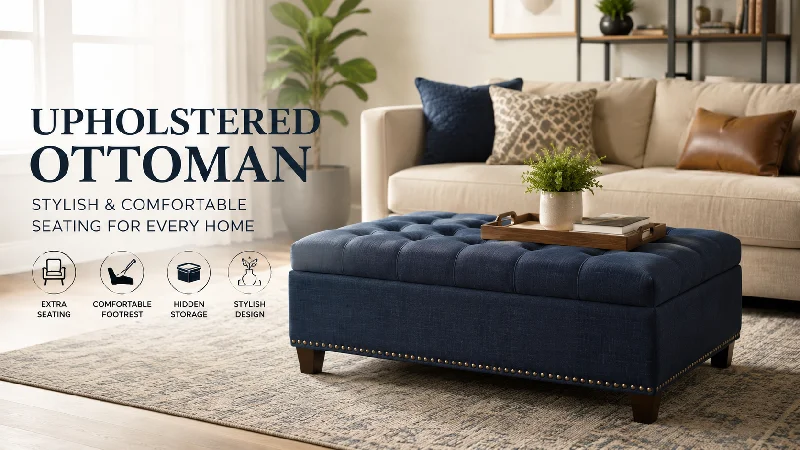
An upholstered ottoman is a padded piece of furniture covered with fabric, leather, velvet, or another upholstery material. Unlike a traditional chair, an ottoman usually does not have a backrest or arms, which gives it a simple and flexible design.
Ottomans come in many shapes, including round, square, rectangular, and even uniquely designed geometric styles. Some models also feature hidden storage, making them particularly useful in smaller homes.
Why Choose an Upholstered Ottoman?
There are several reasons homeowners choose an upholstered ottoman over other types of furniture. Its combination of comfort, functionality, and decorative appeal makes it suitable for a variety of rooms.
1. Adds Extra Seating
When you have guests, an ottoman can provide additional seating without taking up as much visual space as a traditional armchair. A sturdy, well-padded design can be moved around whenever extra seating is needed.
2. Provides a Comfortable Footrest
One of the most common uses for an ottoman is as a footrest. Place it in front of a sofa or lounge chair and you instantly have a more comfortable setup for reading, watching television, or relaxing.
3. Enhances Your Interior Design
An ottoman does more than provide function. It can also become a decorative focal point. Choosing a bold fabric, interesting texture, or complementary color can help bring different elements of a room together.
4. Offers Flexible Functionality
Depending on the design, an upholstered ottoman can serve as a footrest, seat, coffee-table alternative, decorative accent, or storage unit. This flexibility makes it especially useful for multifunctional living spaces.
5. Works Well in Small Spaces
A compact ottoman can provide several functions without requiring a large amount of floor space. Storage ottomans are particularly useful because they allow you to hide blankets, magazines, toys, and other everyday items.
Popular Types of Upholstered Ottomans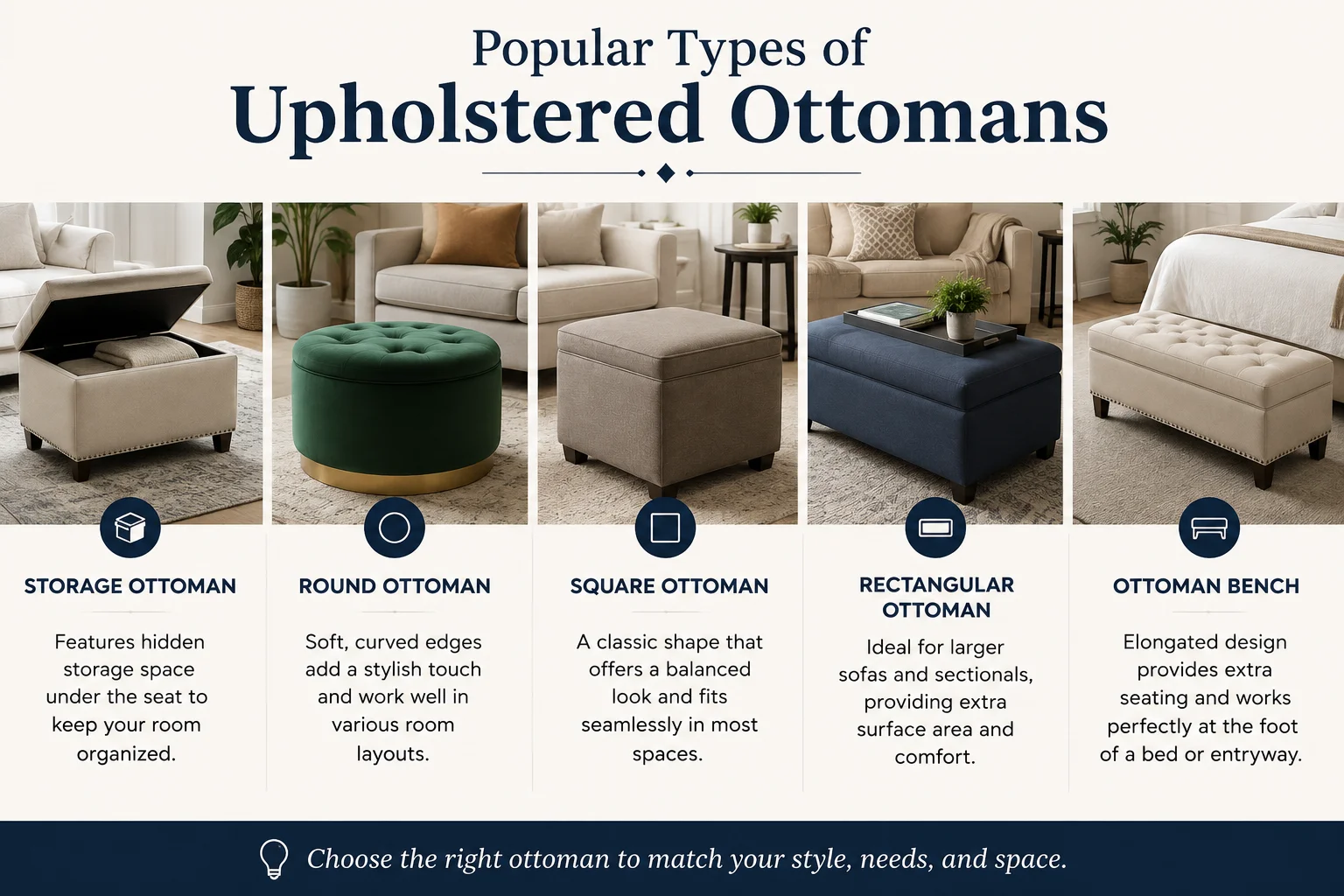
Different ottoman designs are suited to different needs. Understanding the available options can help you choose the right one for your home.
Storage Ottoman
A storage ottoman combines seating or footrest functionality with hidden storage. The top typically lifts up to reveal an internal compartment.
It is a practical choice for living rooms and bedrooms where you need additional space for blankets, cushions, books, or other accessories.
Round Upholstered Ottoman
Round ottomans have a softer appearance and can work particularly well in rooms with curved furniture or contemporary décor. They are also useful when you want to create a more relaxed and conversational atmosphere.
Square Ottoman
A square ottoman offers a balanced, structured appearance. It can be placed in front of a sofa, between chairs, or in the center of a seating area.
Rectangular Ottoman
Rectangular ottomans are ideal for larger sofas and sectional seating. Their elongated shape provides plenty of space for resting your feet while maintaining a cohesive look.
Ottoman Bench
An upholstered ottoman bench provides more seating space than a compact ottoman. It can be placed at the end of a bed, beneath a window, or along an entryway wall.
How to Choose the Best Upholstered Ottoman
Choosing the right ottoman involves more than selecting a color you like. Consider the size, purpose, upholstery, construction, and overall design of the piece.
Consider the Size of Your Room
Measure the available floor space before purchasing an ottoman. You should leave enough room around the furniture for people to walk comfortably.
For a small living room, a compact ottoman may be the best choice. Larger rooms can accommodate oversized ottomans or ottoman benches.
Think About How You Will Use It
Start by deciding what role the ottoman will play.
If you primarily want a footrest, look for a comfortable design that works well with the height of your sofa or chair. If you need extra seating, choose a sturdy model with appropriate weight support. For organization, consider a storage ottoman.
Choose the Right Upholstery Fabric
The upholstery material has a major effect on both appearance and durability.
Common choices include:
- Cotton: Soft and casual, with a wide range of colors and patterns.
- Linen: Lightweight and attractive, especially for relaxed interiors.
- Velvet: Luxurious and visually rich, making it suitable for elegant spaces.
- Leather: Durable and easy to wipe clean, while offering a sophisticated appearance.
- Performance fabrics: Designed to handle frequent use and everyday spills.
When selecting fabric, think about how frequently the ottoman will be used and whether you have children or pets.
Match the Ottoman With Existing Furniture
Your ottoman does not necessarily need to match your sofa exactly. In fact, choosing a complementary color or contrasting texture can create a more interesting interior.
For example, a neutral sofa can be paired with a patterned ottoman, while a colorful sofa may look best with a simple, understated design.
Check the Height
Height is particularly important if you plan to use the ottoman as a footrest. Ideally, it should work comfortably with the seat height of your sofa or chair.
An ottoman that is too high can feel awkward, while one that is too low may not provide the support you need.
How to Style an Upholstered Ottoman
An ottoman can become an important part of your room’s overall design when styled thoughtfully.
Use It as a Coffee Table Alternative
A firm, flat ottoman can sometimes replace a traditional coffee table. Add a decorative tray to create a stable surface for books, candles, or other accessories.
However, avoid placing unstable or spill-prone objects directly on soft upholstery.
Create a Coordinated Seating Area
Place an ottoman in front of a sofa or between two accent chairs to create a cohesive seating arrangement. Choosing a complementary fabric can help connect the different furniture pieces visually.
Add Color With a Statement Ottoman
If your room features neutral furniture, a colorful or patterned ottoman can add personality without overwhelming the entire space.
Deep green, navy, warm brown, or textured neutral upholstery can create an attractive focal point depending on the style of the room.
Place an Ottoman at the Foot of the Bed
A longer upholstered ottoman bench can look elegant at the foot of a bed. It can also provide a convenient place to sit while getting dressed or putting on shoes.
Upholstered Ottoman vs. Traditional Coffee Table
An upholstered ottoman and a traditional coffee table serve different purposes, although there can be some overlap.
A coffee table usually provides a firm surface for drinks, books, and decorative items. An ottoman prioritizes comfort and can double as seating or a footrest.
If comfort and flexibility are your priorities, an upholstered ottoman may be the better choice. If you regularly need a hard surface, a coffee table may be more practical.
Some homeowners combine both by using a tray on a large, firm ottoman.
How to Maintain an Upholstered Ottoman
Regular maintenance can help keep your ottoman looking attractive for years.
Vacuum Regularly
Use a suitable upholstery attachment to remove dust, crumbs, and debris. Pay attention to seams and corners where dirt can accumulate.
Clean Spills Quickly
Accidental spills should be addressed as soon as possible. Blot the affected area rather than aggressively rubbing it, as rubbing can push the liquid deeper into the fabric.
Always follow the manufacturer’s cleaning instructions before applying any cleaning product.
Protect the Upholstery
Keep the ottoman away from excessive direct sunlight when possible, particularly if the fabric is prone to fading. Using appropriate fabric protection can also help with certain upholstery materials.
Follow Manufacturer Instructions
Different upholstery fabrics require different cleaning methods. Always check the care label or manufacturer’s recommendations before using water, detergents, or other cleaning solutions.
Where Can You Use an Upholstered Ottoman?
One of the biggest advantages of an upholstered ottoman is that it can be used in almost any part of the home.
Living Room
Use it as a footrest, extra seating, or a decorative centerpiece.
Bedroom
An ottoman bench at the foot of the bed provides seating and can add an elegant finishing touch.
Entryway
A compact upholstered bench can make an entryway more functional by providing a place to sit while putting on or removing shoes.
Home Office
A small ottoman can provide occasional seating for visitors or give you a comfortable place to take a short break.
Nursery or Family Room
A soft, well-padded ottoman can create a comfortable area for relaxing, provided the product is appropriate for the intended use and placed safely.
What Color Upholstered Ottoman Should You Choose?
The best color depends on your existing décor and the atmosphere you want to create.
Neutral colors such as beige, cream, gray, and brown are versatile and can work with many interior styles. Darker shades can provide contrast, while brighter colors can make the ottoman a statement piece.
If you frequently change your décor, a neutral upholstered ottoman may offer greater flexibility.
Is an Upholstered Ottoman Worth It?
For many homes, an upholstered ottoman is a worthwhile furniture investment because of its versatility. Instead of serving only one purpose, it can provide seating, comfort, storage, and visual appeal.
The key is choosing a design that fits your available space and meets your everyday needs. A well-made ottoman with durable upholstery can become a useful part of your living space rather than simply another decorative item.
Final Thoughts
An upholstered ottoman is a practical and stylish addition to almost any home. From providing a comfortable place to rest your feet to offering extra seating or hidden storage, it can serve multiple purposes while enhancing your interior décor.
When choosing one, consider the size of your room, intended use, upholstery material, height, durability, and existing furniture. With the right design, an ottoman can combine comfort and functionality while giving your space a polished and inviting appearance.
Whether you prefer a compact round ottoman, a spacious storage design, or an elegant upholstered bench, there is an option to suit virtually every room and decorating style.
Frequently Asked Questions
What is an upholstered ottoman used for?
An upholstered ottoman can be used as a footrest, extra seating, decorative accent, storage solution, or coffee-table alternative. Its exact function depends on its size, construction, and design.
Can an upholstered ottoman be used as a coffee table?
Yes, some firm ottomans can be used as coffee-table alternatives. A decorative tray can provide a more stable surface for books and accessories.
What is the best fabric for an upholstered ottoman?
The best fabric depends on how you plan to use the ottoman. Durable performance fabrics are useful for high-traffic areas, while velvet and linen can provide a more decorative or luxurious appearance.
Should an ottoman match the sofa?
It does not have to match the sofa exactly. An ottoman in a complementary color or contrasting texture can add visual interest while still fitting naturally into the room.
How do I clean an upholstered ottoman?
Start by vacuuming the upholstery regularly and treating spills promptly. Always follow the manufacturer’s care instructions because cleaning methods vary by fabric.